Every estate has a beating heart, a location that truly drives its purpose. For some, it may be your stable, for others, a machinery shed, but for many, it is the workshop — the place where repairs are made, projects begun, and hours pass unnoticed.
A well-designed workshop is more than a convenience. It is where timber is cut to length, tools are repaired, equipment is maintained, and ideas take form. For such a space, the choice of material matters. Increasingly, landowners and homeowners alike are turning to the oak framed workshop — a building that serves today’s work and stands ready for decades to come.
The Authority of Oak
Oak is not simply another timber. Its dense grain resists warping, its tannins protect against insects and decay, and its joints tighten as the seasons pass. These qualities have allowed oak structures to stand in Britain for centuries, and they are just as relevant to a modern oak frame workshop.
The strength of oak means wide spans can be achieved without intrusive supports, giving clear floor space for benches, equipment, or machinery. Heavy loads that would test a softwood shed are carried with ease. In daily use, this resilience offers quiet assurance: the frame holds steady, the roofline true, the space dependable.
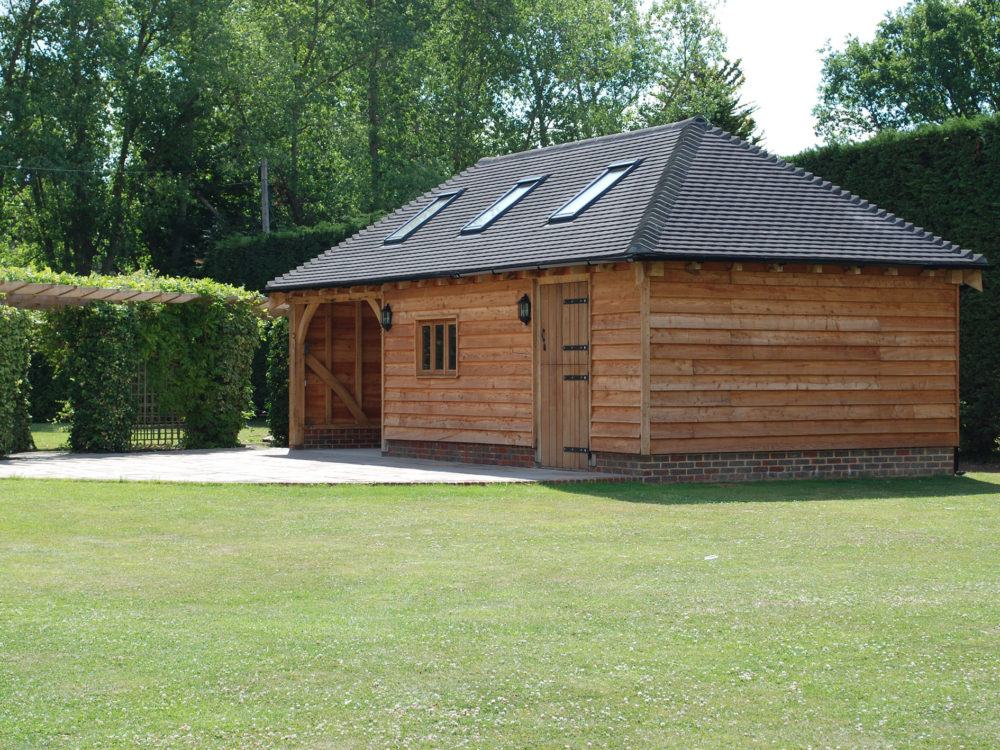
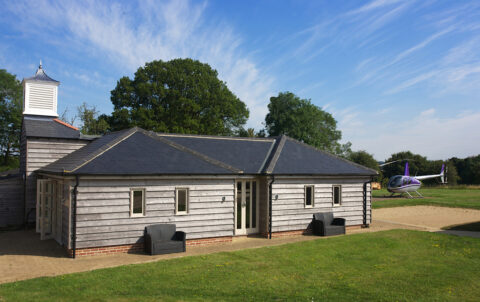
Oak’s character deepens with age. Freshly cut beams are warm-gold, but exposure to sun and rain draws them to silver-grey, a patina that blends with hedgerows, stone, and slate. Where a steel shed jars and a pine structure fades, an oak framed workshop feels increasingly part of its setting.
Oak Framed Workshops in Daily Life
One of the greatest strengths of an oak framed workshop lies in its adaptability. No two are alike, because no two owners use them in the same way. A frame that begins as a place for tools may, over decades, become a studio, a storehouse, or a space where generations share work. The permanence of oak gives confidence to invest in a building that will not limit but expand what is possible.
Carpentry and Craft
The traditional image of a workshop is of timber cut on a bench beneath steady north light. In an oak frame, this tradition finds its natural home. The frame itself is often left exposed, beams overhead forming both structure and storage. Hooks can be fixed for clamps, pulleys can lift planks into place, and walls can carry shelves heavy with hand tools. For joiners or furniture makers, the solidity of an oak frame workshop provides more than atmosphere: it is a space robust enough for machinery, quiet enough for detailed work, and sympathetic enough to feel part of the craft itself.
Estate Maintenance
On estates, a workshop is rarely about delicate joinery. It is the room where mowers, tractors, or all-terrain vehicles are brought in for repair. Oak’s strength makes wide double doors possible, while clear spans allow machinery to be manoeuvred without obstruction. Floors can be laid to carry serious weight — from trailers to stacks of timber — without cracking or shifting. In this way, the oak framed workshop becomes the backbone of estate upkeep, the place where essential repairs are made and continuity maintained.
Creative Work
More recently, workshops have found a new role as studios. Painters commission space with high rooflines for canvases, sculptors need room to move heavy stone or clay, instrument makers value the even light and quiet atmosphere. The warmth and steadiness of oak provide an environment that encourages focus and reflection. Where a prefabricated shed feels temporary, an oak framed workshop becomes a place to create with confidence — a building that matches the seriousness of the work within it.
Family Space
A workshop need not be solitary. Many clients now see them as shared spaces, large enough to accommodate multiple uses. Parents work on estate maintenance while children build models or repair bicycles nearby. The smell of oak and cut timber becomes part of family memory, the building itself a backdrop for skills passed from one generation to the next. An oak frame workshop offers not only utility but a place where knowledge is handed on, season after season.
Ordered Storage
A workshop is as much about keeping things safe as about using them. Tools, seasonal equipment, or timber stacks require security against damp, pests, and collapse. In an oak frame, the air is dry, the structure steady, and the proportions generous enough for proper shelving and racking. Where a shed begins to sag after a few winters, an oak framed workshop provides certainty: what is stored remains sound, and the building remains part of the estate’s order.
Hybrid Uses
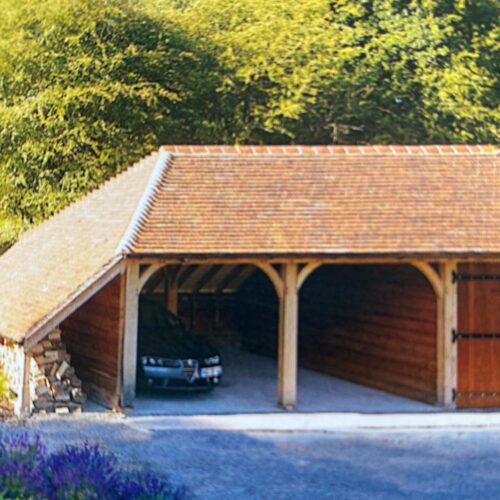
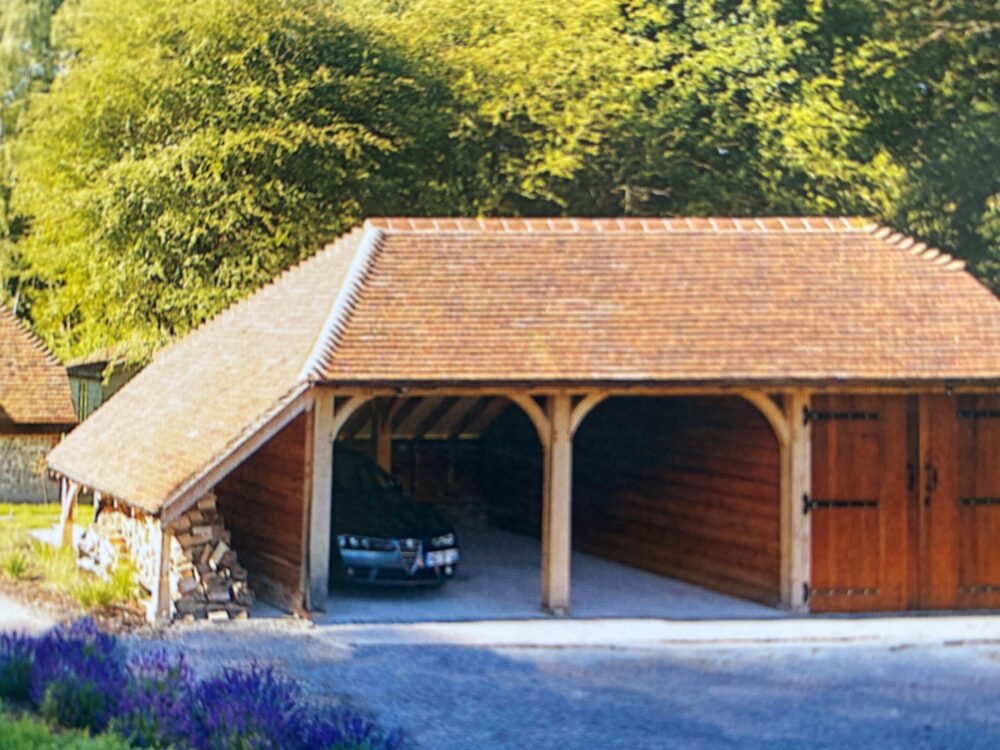
Many commissions now combine purposes. Some owners design a workshop that doubles as a garage, sheltering vehicles in winter but offering working space through the rest of the year. Others blend workshop and garden room, with one bay devoted to benches and the other to a quiet retreat. Oak makes this flexibility possible: spans wide enough to hold a Land Rover, proportions measured enough to frame an office, studio, or gym alongside. The building does not dictate its use — it enables it.
Workshops Through the Seasons
A workshop is lived in year-round, and oak responds to the rhythm of the seasons.
- Winter: On a frosty morning, the doors open to reveal tools dry and secure. The thick oak beams resist damp and frost; good insulation and glazing make the space usable when the weather drives you indoors. A steel shed might drip with condensation, but an oak frame workshop remains steady.
- Spring: As days lengthen, the workshop becomes a place to start projects. North-facing windows carry even light for planting trays, repairs, or carpentry. The scent of oak and fresh-cut timber mingles with the smell of turned soil.
- Summer: Wide-span doors can be thrown open to the garden. Ventilation comes naturally through careful siting, while the depth of the frame keeps the interior cool. This is the season for big tasks — restoring a tractor, finishing furniture, building equipment for harvest.
- Autumn: The workshop turns to storage. Garden machinery, furniture, and timber are brought in for safekeeping. The oak frame holds weight and weather alike, ensuring that nothing is spoiled before spring returns.
Why Alternatives Fall Short
Other materials may appear cheaper or quicker, but they rarely prove lasting. Softwood splits and bows within a few seasons, demanding chemical treatment and regular repair. Prefabricated sheds, thin-walled and light-framed, seldom withstand the strain of heavy tools or the damp of a British winter. Steel is durable, but its industrial presence jars in a garden or beside a house.
By contrast, oak framed workshops carry permanence without intrusion. Their warm tones weather to silver-grey, blending with hedgerows and stone. What begins as a new addition soon feels as though it has always belonged.
Sustainability and Value
Oak also answers to today’s priorities of sustainability and investment. According to the Forestry Commission, oak remains one of the UK’s most reliable renewable resources, with carefully managed European forests supplying timber under strict certification schemes. Choosing oak supports sustainable woodland management and locks carbon within the structure for its entire lifespan.
Unlike concrete or steel, which require vast energy to produce, oak demands far less processing. Its longevity is also its sustainability: a building that stands for centuries avoids the cycle of replacement and waste.
From a property perspective, permanence carries weight. Savills has noted that well-designed outbuildings can add significant value, often 5–10% in sought-after rural areas. Knight Frank similarly highlights demand for flexible estate buildings that combine practical use with architectural sympathy. For discerning buyers, an oak framed workshop is recognised not as a temporary utility but as part of the estate itself — a sign of care, investment, and continuity.
Imagined Case Examples
To see this in practice, consider three typical commissions:
- The Craftsman’s Workshop: In the Cotswolds, a property owner commissions a modest single-bay oak frame workshop with wide north windows. It becomes the place for furniture restoration — quiet, steady, and well-lit, with oak beams overhead that double as storage for clamps and jigs.
- The Estate Hub: On a Sussex farm, the requirement is for a workshop that can hold a tractor and mower through winter while still leaving bench space for repairs. Oak’s strength allows a wide span without intrusive posts. The building becomes the working heart of the estate, practical yet proportioned to sit well beside older barns.
- The Family Workshop: In Hampshire, a larger frame is commissioned, half given over to serious machinery, half designed for family use — bicycles, school projects, shelves of tools for shared work. The oak frame allows flexibility, and the building grows with the family’s changing needs.
These examples show how varied an oak framed workshop can be. What links them is not style or scale, but permanence: each is designed to last, both in daily use and as part of the property.
The Brookwood Barn Co. Difference
At The Brookwood Barn Co., every oak frame workshop begins with measured design. Proportion and siting are considered carefully, ensuring the building feels integrated with its surroundings. Each frame is hand-cut in our Sussex workshop, using mortise-and-tenon joints secured with oak pegs — a method proven across centuries. Before leaving the yard, the frame is dry-laid in full, every joint checked for precision.
No two commissions are alike. Some are modest single-bay rooms for personal craft; others are larger structures with wide-span doors, overhead storage, or space for estate machinery. Each carries the same integrity of material and workmanship, backed by our ten-year structural guarantee.
Our clients tell us that what they value most is not only the craftsmanship but the certainty: once the frame is raised, it feels as though it belongs. That sense of belonging, of a building cut to stand in place for generations, is what defines Brookwood’s approach.
The Oak Frame Workshop: An Investment That Lasts a Lifetime
A workshop is often the most practical of outbuildings. Yet when built in oak it becomes something more: a structure that adapts to changing needs, weathers with grace, and settles into the life of the property. To commission an oak framed workshop is to choose permanence — a building as useful tomorrow as it is today, and still standing ready for the next generation.
At The Brookwood Barn Co., we cut every frame with that purpose in mind. We invite you to begin the conversation with us.
If you are ready to take the next step, we would be delighted to discuss your ideas and create an oak frame workshop designed precisely for you. Contact The Brookwood Barn Co. today to begin the conversation.